Drakken help clients to be more efficient, more productive, and more competitive. It’s instrumentation automation, control system, and power distribution offerings are innovatively designed to ensure reliability. CEO Ben Watts and COO Marcel Bruyere tell Energy Focus that Drakken is now perfectly placed to grow.
The rapid and tumultuous transformation of the global energy system is reshaping demands placed on electrical infrastructure, automation, and power distribution. As power networks grow more complex and digitally integrated, operators are increasingly looking for partners capable of delivering bespoke engineering solutions rather than isolated components. In this environment, specialist systems integrators are playing a critical role in ensuring projects move from concept to operation efficiently, utilizing the most up to date technologies.
Operating at the crossroads of instrumentation, controls, and electrical systems, Drakken has built a reputation as a trusted partner to engineering, procurement and construction firms working across complex energy and industrial environments.
Adapted from our feature article
From its base in Dubai, the company has spent more than a decade supporting projects across multiple continents, developing a collaborative model that places it directly inside the operational teams of its clients.
“Our core business is turnkey electrical, instrumentation and automation systems integration. We do a lot of work with small and medium sized EPC companies, and those companies are typically lean teams that look to solutions providers like us. They outsource complex problems for us to resolve, and our best clients see us as collaborators as opposed to a vendor in their supply chain. We have always been very relationship-based and our primary objective is establishing a reputation as a trustworthy and reliable partner for our clients,” explains CEO Ben Watts.
Rather than approaching projects as a traditional contractor, Drakken positions itself as a technical extension of the client organisation, embedding expertise into the delivery process and helping project teams make the best engineering and commercial decisions.
“With our clients, we act as part of their team and the interface is genuinely removed. We focus on what is going to work best for the project as a whole, from a safety, reliability, cost and schedule perspective. This collaborative approach focuses on the overall project’s success, which benefits all stakeholders and builds trust that Drakken is not just trying to execute a contract, but building long lasting partnerships,” adds COO Marcel Bruyere.

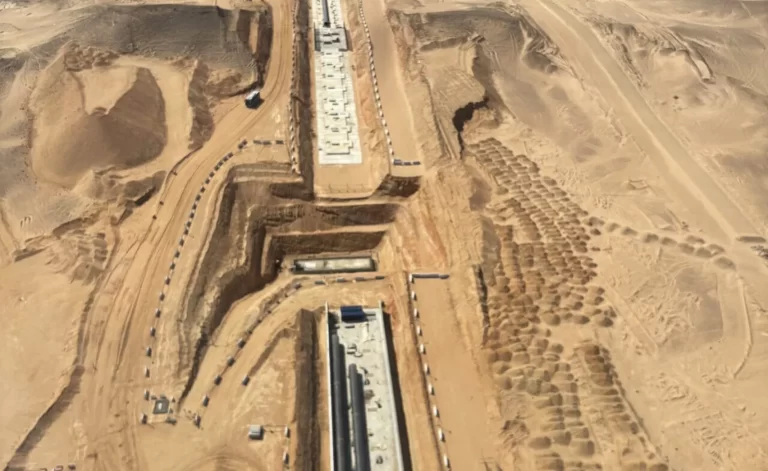
The Demir Dagh facility for Oryx Petroleum – Drakken delivered oil & gas facilities via the company’s bespoke fast track engineering services.
That philosophy has shaped the company’s approach to project delivery for more than a decade. Engineers, automation specialists and power distribution experts work alongside project teams to refine system architecture, optimise procurement decisions and accelerate delivery timelines.
“We are a part of their team and not just an independent third-party contractor. We can provide options to optimise cost and delivery by working closely together as a partner,” says Watts.
This collaborative mindset comes at a time when automation is becoming central to the evolution of the global energy system. Industry analysts tracking the process automation and instrumentation market estimate that demand will grow strongly throughout the decade as industries pursue digitalisation, efficiency improvements and more resilient energy infrastructure. Governments are also exploring how advanced data and artificial intelligence tools can support the management of complex energy networks, enabling more efficient renewable generation.
For companies operating across large-scale energy and industrial projects, these trends are increasing the importance of system-level thinking. Electrical design, automation architecture and instrumentation must operate seamlessly together, and this is where integrators such as Drakken have built a competitive advantage.
“We look at where the client will place power distribution, how they run system architecture for controls, and how that equates to price per meter for copper. We optimise the scope of work for the project, and that can be in terms of price or quality or delivery – we have many different options through our supply chain which has been established over the last 15 years executing projects globally. We know that we provide a lot of added value in that space and it forms a large part of our USP,” Watts continues.
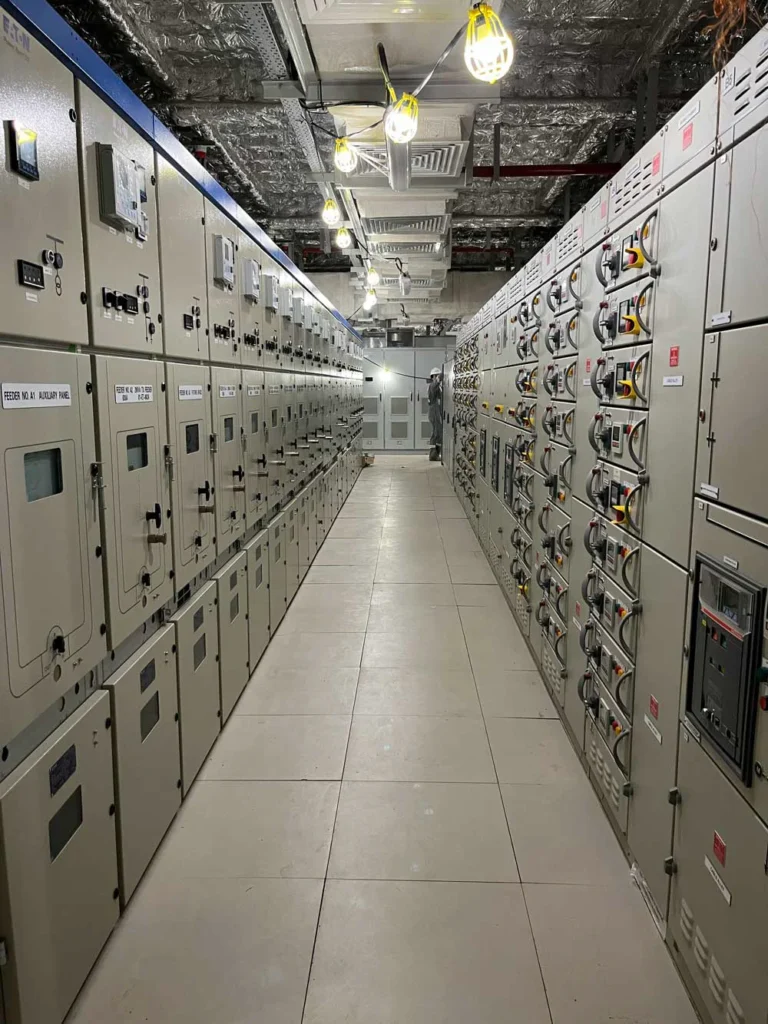
Drakken delivered an advanced E-House for Nigerian FPSO, incorporating electrical, instrumentation and advanced automation.
Collaborative Growth
That philosophy has shaped the company’s approach to project delivery for more than a decade. Engineers, automation specialists and power distribution experts work alongside project teams to refine system architecture, optimise procurement decisions and accelerate delivery timelines.
“We are a part of their team and not just an independent third-party contractor. We can provide options to optimise cost and delivery by working closely together as a partner,” says Watts.
This collaborative mindset comes at a time when automation is becoming central to the evolution of the global energy system. Industry analysts tracking the process automation and instrumentation market estimate that demand will grow strongly throughout the decade as industries pursue digitalisation, efficiency improvements and more resilient energy infrastructure. Governments are also exploring how advanced data and artificial intelligence tools can support the management of complex energy networks, enabling more efficient renewable generation.
For companies operating across large-scale energy and industrial projects, these trends are increasing the importance of system-level thinking. Electrical design, automation architecture and instrumentation must operate seamlessly together, and this is where integrators such as Drakken have built a competitive advantage.
“We look at where the client will place power distribution, how they run system architecture for controls, and how that equates to price per meter for copper. We optimise the scope of work for the project, and that can be in terms of price or quality or delivery – we have many different options through our supply chain which has been established over the last 15 years executing projects globally. We know that we provide a lot of added value in that space and it forms a large part of our USP,” Watts continues.
In partnership with Brent Subsea Services, Drakken now delivers more comprehensive integration & maintenance capability.
Agile, ambitious
While the broader market continues to evolve, Drakken’s leadership believes the company is entering a new phase of development. A management buyout completed in 2025 has brought decision making closer to the operational heart of the organisation, giving the leadership team greater flexibility to pursue opportunities and respond quickly to client needs.
“The approach that we take with our clients is that we are agile. We want to innovate and be flexible, and we want to be objective-driven. We want to make recommendations for optimization, and we want to make sure that the client appreciates the work we do. We want to contribute to their overall success,” says Bruyere.
The company is also exploring new markets closer to its regional base, particularly within the United Arab Emirates.
“We have been in Dubai for 14 years and we have been working everywhere from Iraq to Nigeria to southeast Asia and across North America and Europe. However, there is a whole world of business happening close to us in Abu Dhabi. Last year, we started moving towards that and we are keen to get established there,” Bruyere continues.
At the same time, internal investment is being directed toward new technologies that could further strengthen Drakken’s position in the automation space. The company has begun exploring how advanced algorithms and artificial intelligence techniques could be integrated into control systems to enhance operational performance.
Behind these initiatives is a leadership team now fully embedded within the organisation’s daily operations.
“In most opportunities, when it comes to schedule, we can beat the market because we have better options, we make faster decisions, we are fully knowledgeable about exactly what needs to happen.”
As global demand for reliable power infrastructure continues to expand, particularly in digital industries such as data centres, the need for flexible engineering partners is only increasing. For Drakken, the strategy remains firmly centred on delivering value through close collaboration, technical depth, and the ability to solve complex project challenges.
“Our goal is to become the best systems integrator in the region by demonstrating the value that we can add for clients,” Watts concludes.